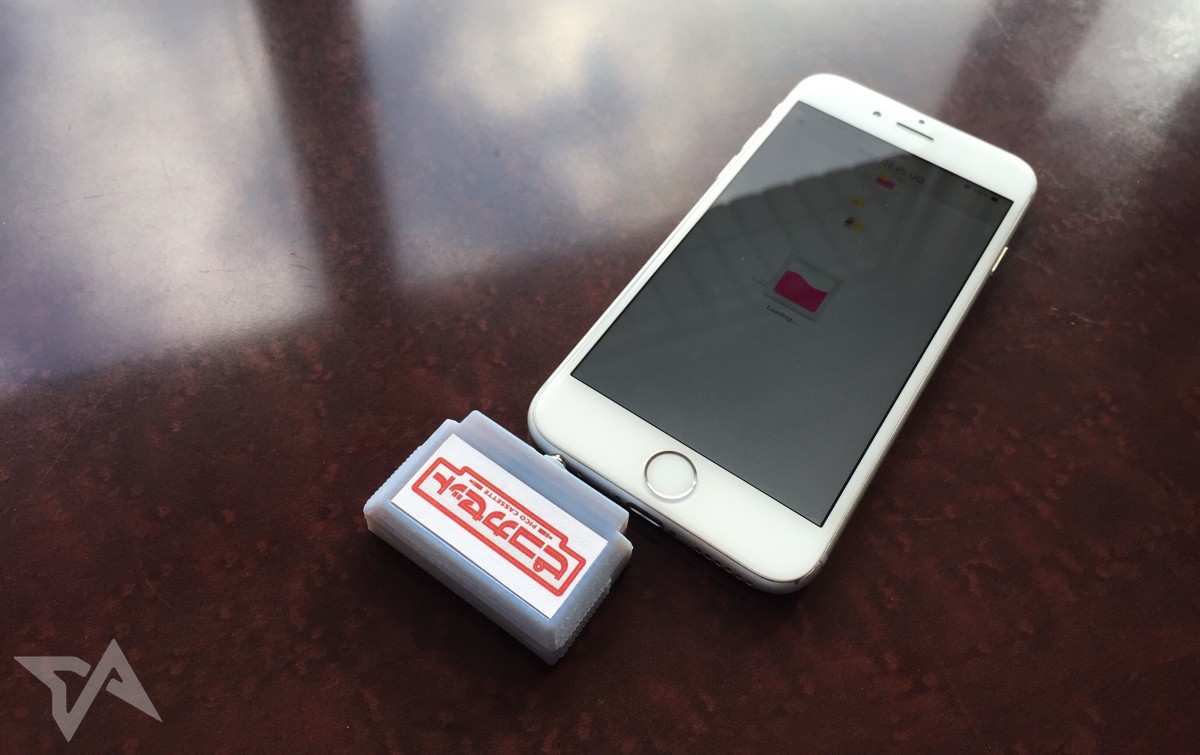
Remember when video games were sold in cartridge form? If you’re a baby of the eighties, chances are you owned – or at least played – an original Nintendo or Super Nintendo. In your college dorm, you may have felt nostalgic for simpler times and bought a retro console or downloaded some shady emulation software. Now, with most people owning a smartphone, a vast library of neo-retro titles and vintage re-issues are quite literally at your fingertips via an app download.
Tokyo-based startup Beatrobo wants to bring back the physical game cartridge – at least aesthetically speaking – and give old-school gaming enthusiasts official, collectible copies of their favorite titles.
You might remember Beatrobo from previous articles here on Tech in Asia – the startup began as a social music service before pivoting into hardware with its PlugAir dongle. PlugAir acts as a physical key for unlocking content – until now, music and video – when the device is plugged into your smartphone or tablet’s headphone jack. Instead of using NFC or a serial number printed on the dongle itself, PlugAir authenticates content by sending an inaudible sound wave to the device – technology that the startup has most recently utilized to enter the payments space.
“We’ve been thinking about gaming since we designed PlugAir,” Beatrobo founder and CEO Hiroshi Asaeda tells Tech in Asia. “We thought it could be cool to plug a character-themed dongle into your phone and then unlock a special character in a game like Puzzles and Dragons. We had the idea before Nintendo announced its Amiibo figures, and we still think there’s an opportunity to make that kind of device for mobile.”
Beatrobo is dubbing its mini game cartridges “Pico Cassettes,” though Asaeda says he may change the name for non-Japanese markets. The design mimics the original NES cartridges sold in Japan, which were smaller than those sold in North America (NES is called “Famicom” in Japan – short for Family Computer – and, like the cartridges themselves, has a slightly different appearance).
“The original PlugAir shape was a cube, and everyone had to ask what it does in the first place,” Asaeda says. “The game cartridge shape explains itself and it gets people who grew up with NES and Super NES excited.”
Collectible, tradable
Like PlugAir for music and video – which is still being sold at Lawson HMV brick-and-mortar retailers – Pico Cassettes will use sound wave authentication and a companion app to launch the games. Asaeda hopes that Pico Cassettes will be usable on multiple devices and tradable, like the original cartridges they’re modeled after – but that decision will ultimately lie with the users.
“You buy it, you play it, you give it to your friend and they can play it too,” Asaeda says. “The smartphone is a TV screen, the app is a console, and the Pico Cassette is a game cartridge.”
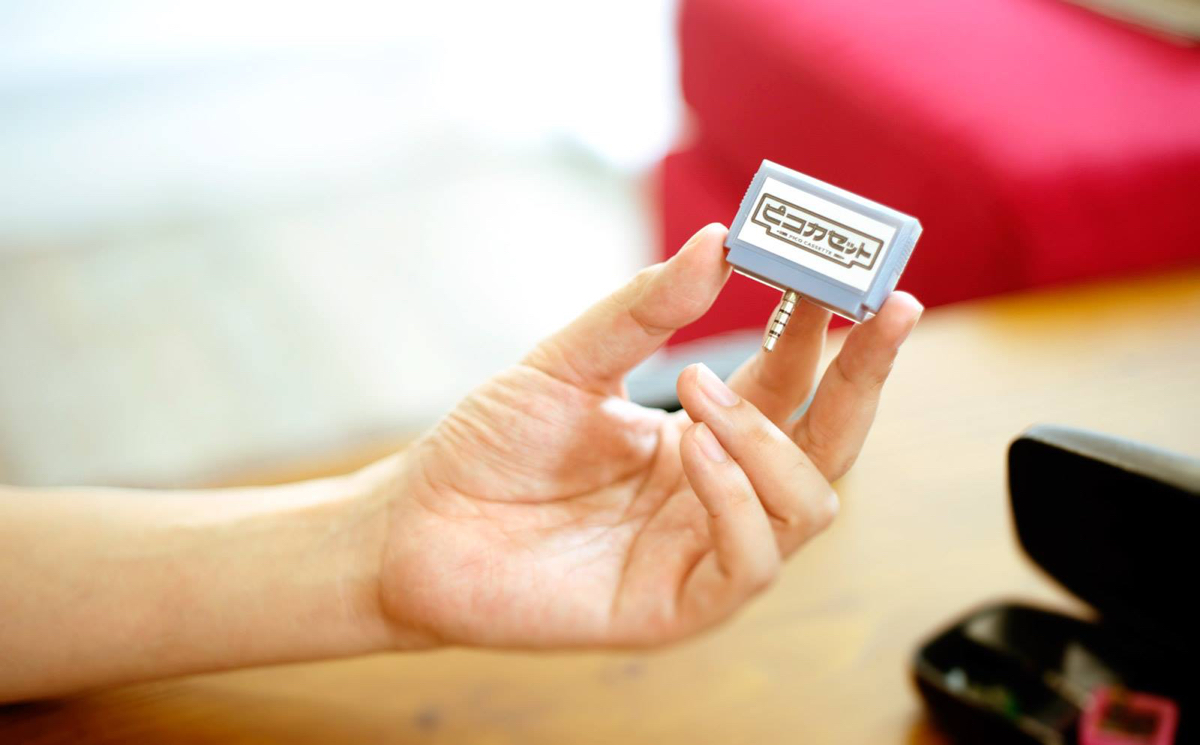
Beatrobo’s first target is to re-launch old NES titles like Super Mario Bros. andPac-Man. Being in Japan – home to the likes of Nintendo, Konami, Capcom, Sega, Tecmo, and Taito – gives them an advantage when it comes to access – but will traditional gaming companies embrace the startup’s mobile ambition?
“We’re in talks with game companies to license old titles,” Asaeda says, but the CEO declined to confirm which in particular. He did reveal, however, that the startup would show a working demo of Pico Cassette at the Tokyo Game Show convention later this week. He added that a crowdfunding campaign is also in the works.
Spotify for retro gaming
Apart from convincing the likes of Nintendo and Konami to jump on board, the biggest question looming for Beatrobo is whether people will embrace not only a physical solution, but a legal one. Console emulators – software that allows games to be played on unauthorized hardware like a PC, for example – are easy to find. Game ROMs – the actual game data ripped from a cartridge – can be pirated just like music and television shows.
Despite harsh words from Taylor Swift, Spotify was linked to a major decline in music piracy after its launch. Asaeda hopes that Pico Cassette will do the same for vintage gaming.
“It’s easier to get music using Spotify than pirating it – you get the best quality audio and don’t have to worry about viruses or malware being hidden in files you downloaded from a shady torrent site,” he says. “Retro games are pirated because people can’t get them without buying a 30-year-old console. Sure, there are a few official games, but I’m not paying US$16 for Final Fantasy VI on iOS. The feeling of ownership is missing with an app.”
Asaeda says he hopes to sell Pico Cassettes for US$15, depending on individual royalty agreements with potential IP owners – not much less than the above-mentioned app, but with the added benefit of being a physical collectible that you can trade or gift to friends when you’ve had enough fun.
So what if DeNA, Nintendo’s official mobile gaming partner, tries to strike first with an Amiibo for mobile?
“They should just acquire us,” Asaeda says bluntly. “[Amiibo’s] existing NFC solution won’t work on iPhones, since Apple locks that feature down for Apple Pay. We’re universal since we use sound waves, so we can support iOS and Android devices right out of the box.”


0 Response to "Go back in time with retro game cartridges that plug into your smartphone"
Posting Komentar