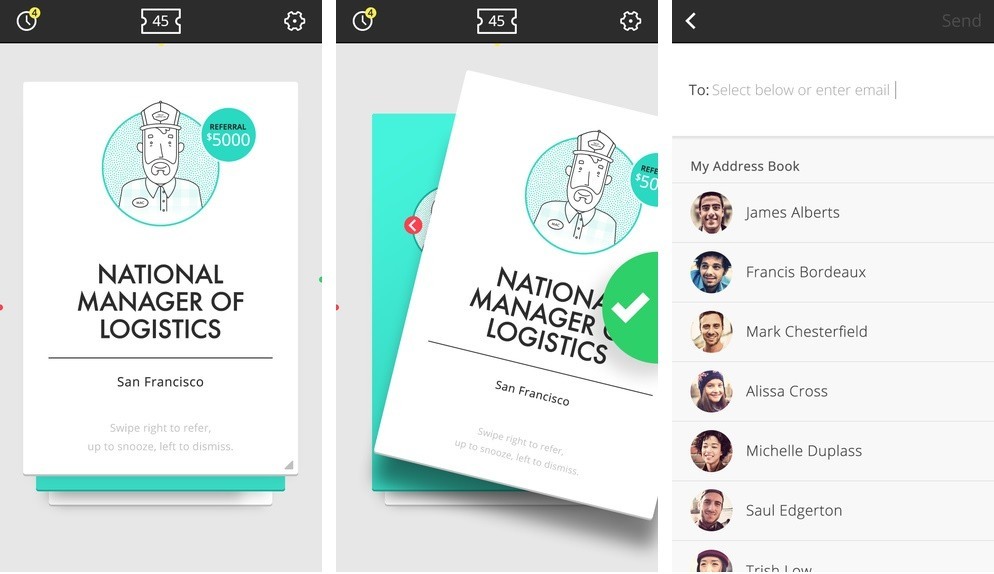
Don’t let your data decide your product decisions

Don’t let your data decide your product decisions

When we launched Tripnary we went the extra mile to make sure we tracked every possible user interaction in the app so that we didn’t make the mistake of building something that the users didn’t want. Our advisors often asked “What part of the app is used most?” and suggested that we focus the product where users are already spending the most time. Makes sense right? Let the voice of the customer guide the roadmap.
But we resisted.
Tripnary quickly reached a million swipes, people even called us “Tinder for travel”.
This was all very encouraging, but most people were using the app to create bucket lists and few were comparing flights — what we considered the unique selling proposition of the app. With Tripnary, our goal is not only to help you build your travel bucket list but make it actionable too. We are building an app that helps you decide your next destination from your bucket list based on your budget.
There are many apps that let you create a rudimentary list of places you want to go (Tripadvisor, Gogobot), but from the beginning Tripnary’s objective was to help you make this a reality. Why? Because we know that leisure travelers are constrained by their budget and dates, but are flexible about where they can go.
So even though our roadmap was obvious based on user data, we always asked ourselves, if that’s the path we wanted to take.

Don’t just act on symptoms when the root cause of a problem remains unaddressed…

We quickly realized that we needed to be careful with early data as it can both help and hinder you. Sometimes early data can tease you with interesting metrics, but may lack any meaningful insights. The danger with obsessing over every interaction the user performs based on early metrics is that you feel the need to start pivoting your product based on this data.
We got users started with creating their bucket list. We saw users getting hooked to the Tinder-esque swipe to add places to their bucket list. Some people spent upwards of two hours (!) doing this. With Tripnary, it would have been easy to build more features around mindlessly swiping places.
Creating and sharing lists of places is fun for a while, but it’s not something that hooks the user in the long term. Had we done this, we would end up prematurely acting on symptoms when the root cause of a problem remained unaddressed. So we had to look deeper.
Users engage most with the first screen they see when launching the app, and it should emphasize the core benefits for both new and regular visitors. New users will judge the book by its cover. They have a shorter attention span and want to understand what the app does quickly. Users return to the app because they like the value proposition you are selling. If you make it hard for either of them to get the core value of the app, you will win neither of them.
While we became very successful in driving engagement by teasing beautiful pictures and building an addictive interface, the core functionality of quick flight price comparison got embedded within the app with a boring interface. So even though our Tinder swipe was the most exciting metric, we knew this is just a side-effect of the way we designed the app.

Success is dependent upon asking the right questions…

In the early stages, what’s more important is to discover inconsistencies in the data relative to your hypothesis. For example, we believed that Tripnary users would spend almost equal amounts of time on the three key screens of the app. But, we were obviously surprised after seeing the actual usage. Before focusing on new ideas, we had to first make sense of the inconsistencies.
Because people loved swiping to build their bucket list on Tripnary, it would have been easy to fall into the trap of pivoting. You will similarly get the urge to pivot or add new features based on a few weeks of data. Fight it. Fight it hard. You built a product based on a problem you identified.
Now, it is entirely possible that the problem is not that severe, or affects a very small number of people for it to be a meaningful business, or even that your product is ahead of its time. All of these are possibilities and could quickly kill your your startup. But you can only consider these possibilities once you havequestioned your current product’s viability under many scenarios.
The most dangerous thing to do is to quickly pivot the core of the product based on early data. That’s the fastest way to “kill” your startup — once you have pivoted away from your original idea/problem/solution, it’s effectively dead, isn’t it?
In Tripnary’s case, we headed back to the drawing board and outlined all the things that created friction in communicating the core value of the app. Instead of asking what’s the most used part of the app, we asked why are people not performing the action we wanted/expected them to (comparing flights)? Basically, if you don’t ask the right questions, at best, you discover nothing and, at worst, you derive the wrong insights.
So in early stages of product development, your focus must only be to minimize any friction between users and your product’s intended goal, instead of getting distracted with new features, or in-depth analysis of metrics you have gathered. To be sure, I am not suggesting that you ignore the data. Far from it.
It’s hip to claim you are a data-driven company. Just be cautious of using data to drive your product too early.

A design isn’t finished until somebody is using it…

So all of this is a long-winded way of saying that it’s necessary to take a hard look at your product — it’s possible that you have identified a genuine problem, you have a killer solution, but maybe the UX is lacking. Are there any gaps in the design to be plugged in to drive users to your intended action or to amplify the value proposition?
Focus on the design and user experience before focusing on features and pivots. With Tripnary, we unintentionally pushed the user to spend more time browsing and swiping places instead of designing a clear path to make their bucket list actionable.
So as we continue to learn and evolve Tripnary, we are taking a decidedly data-with-a-spoonful-of-salt driven approach to refine the app. Here is a sneak peek of what’s coming in the next big app update.
Even though there are still a few iterations left on the UX, you can start to see the direction we are taking.
We’re strengthening the link between bucket list creation and flight comparison. So, we boiled down a three screen workflow to two conjoined screens. Because our goal is to help users compare fares to several relevant places easily, we will be de-emphasizing browsing and recommendations a bit more in subsequent versions, in favor of something way more exciting. Now what could be more exciting than swiping left and right? Stay tuned! Spoilers are no fun!

Japanese edtech startup acquired by US startup amid online tutoring boom

Japanese edtech startup acquired by US startup amid online tutoring boom

Langrich acquired by EnglishCentral
American edtech startup EnglishCentral earlier this week announced the acquisition of a Japanese startup offering similar online tutoring for English learners. Langrich will be acquired in a share-swap agreement that sees the Tokyo-based startup’s investors – KLab Ventures and Hitomedia – become minority shareholders in EnglishCentral. According to a KLab spokesperson, it marks the first time that a Japanese startup has been acquired by a larger American one.
Founded in 2010, Langrich uses English tutors in the Philippines to provide English instruction via Skype. Like its main competitors, Rarejob and DMM, lessons are one-on-one and focus on conversation skills. Langrich users will now benefit from a video lesson archive for web and mobile, as well as EnglishCentral’s speech recognition technology for studying vocabulary and pronunciation.
“We will keep the Langrich brand as our consumer brand in Japan,” Alan Schwartz, EnglishCentral’s CEO, tells Tech in Asia. “EnglishCentral will remain the name of the company and the name of the platform that we provide to our global partners, including many leading online learning companies […] in Korea, China, and Brazil.”
EnglishCentral, headquartered in Arlington, Massachusetts, boasts more than 100,000 paying users per month. The service is available in more than 100 countries and at over 400 universities across the globe. Perhaps EnglishCentral’s biggest differentiator in the crowded edtech space is its money-back guarantee – the startup refunds 100 percent of a student’s lesson fees if they don’t level up after three months.
Schwartz says that EnglishCentral will retail all of Langrich’s current employees – a total of 260 including teachers. “We’re also adding dozens of teachers a month, and we will not limit teacher hiring to the Philippines going forward,” he adds.
The Japanese juku – cram school – industry is valued at roughly US$10 billion.Eikaiwa – conversational English lessons – take a big chunk of that market. With strong internet infrastructure and a population that’s increasingly fond of smartphones, many of those lessons are moving online. That could hurt brick-and-mortar schools, which have already faltered, since online learning is more cost effective for learners. This shift to online has created, arguably, one of Japan’s hottest startup verticals.
“After the Nova implosion (once Japan’s largest physical English conversation school, Nova went bankrupt in 2007), the whole market in Japan stalled, but things have changed in last several years,” Schwartz explains. “Rarejob is now public and you can see from their financials they are growing at close to 50 percent in terms of registered users. DMM we believe is growing even faster. They are the main competitors in the online market in Japan that have traction. We grew 90 percent last year in terms of revenue.”
Further evidence of Japan’s online tutoring boom could be seen at Tech in Asia Tokyo’s Arena pitch battle last week, where domestic edtech startup Mana.bo took the grand prize.
Mobile gaming and user acquisition in Asia (Infographic)

Mobile gaming and user acquisition in Asia (Infographic)

We’d like to present our research on Asia’s market data, user preferences and behavior, their paying abilities, and most importantly, the KPI’s for a successful launch in Asia.
In the infographic below you will find:
  • Asian market data & insights.
  • Asian players’ happy hours.
  • In-app purchases demographics.
  • Creatives & visuals preferences.
  • And even more!
Asian Mobile Game Market
How anime and a road trip led to a new startup

How anime and a road trip led to a new startup


A life-long love of anime, a cross-country road trip, and the suffocating frustration of working for a large Japanese firm all came together and resulted in the creation of one of the world’s first crowd-translation platforms.
Naoki Yamada started Conyac to take advantage of the significant price and market gap that exists between the low-quality machine translation offerings and professional quality human translation companies. Naoki shares his insights and experience on two of the most challenging problems growing Japanese startups face; convincing large Japanese companies to trust your small startup, and the cultural challenges they face when they begin to expand overseas.
Naoki also talks about the challenging and unique nature of raising venture funding in Japan and we take a hard look at whether startup incubators provide lasting value to the companies they incubate.
Although Japanese employees are known worldwide for the number of overtime hours they put in, Japanese founders work even harder, and in this episode we examine the ways in which Japanese founders try (and frequently fail) to achieve some kind of work-life balance.

Startup builder LiteLabs enters Indonesia, unfazed by ecommerce giants

Startup builder LiteLabs enters Indonesia, unfazed by ecommerce giants

litelabs-team
LiteLabs team
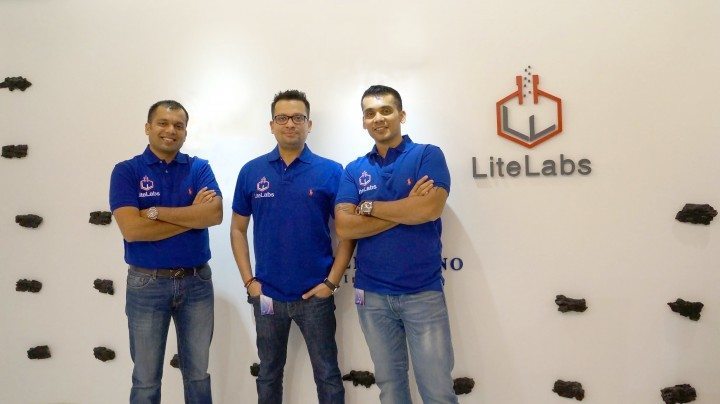
Some experts will tell you it’s too late to catch the fast-moving ecommerce train in Indonesia, as names like Lazada, MatahariMall, Tokopedia, and Bukulapak may soon have the mainstream consumer market sewn up. LiteLabs— a startup and innovation lab operating in Singapore, Jakarta, and Bangalore — would argue against that idea. The international company builder’s co-founder and CEO Dipendra Singh Jain is betting that the archipelago still has many greenfield opportunities in ecommerce.
“Some of the biggest names in India were successful models in the USA,” explains Dipendra. “However, the success for these startups lies in the fact that the ventures were able to plug the holes in the [existing] operating models […] This is lacking to a certain extent in Indonesian startups, where execution still seems to be tougher in spite of the creative ideas.”
Dipendra spent his formative years in Indonesia during the early 1990s, when the internet was just getting started, he says. Abroad, he worked for a few “top Fortune 100 companies,” with stints at Dell, HP, Accenture, and others. Now, he’s back in the archipelago with what he believes is the right know-how to “capture a piece of the Indonesian ecommerce pie.”
visual search ecommerce madstreet den 1
See: No country for ecommerce unicorns: why the word ‘bubble’ may not apply to Indonesia

Investment snipers

With a modest bankroll of US$5 million, Dipendra says LiteLabs is currently working on seven in-house startup concepts. In the investment game, US$5 million is a small sum. Dipendra knows that, which is why LiteLabs won’t be able to adopt the spray and pray investment thesis in Jakarta. It also won’t be able to launch firms that can compete with those of Rocket Internet right out of the gate. Instead, Dipendra and his crew will need to aim carefully, and act more like a sniper with only a couple bullets.
LiteLabs is working on multiple projects for Indonesia. But Dipendra discloses only two of them to Tech in Asia. The first is a product called SearchOn, which isn’t live yet. Dipendra says, “SearchOn will be a game changer for online ticket bookings, for movies and events, and more.” According to him, the firm will let users set up a night out on the town, and have nearly every aspect planned for them, before they step out of the house. Ideally, SearchOn users will be able to buy cinema passes for the exact seats they want to sit in. They’ll also be able to make dinner reservations, and arrange for scheduled transportation to and from the evening’s destinations.
Many will agree movie tickets seem like a good idea in the archipelago. But others may argue transport is a problem that’s already being solved by the likes of Uber, Go-Jek, and GrabTaxi. True skeptics are sure to suggest SearchOn will need to search on for a better product-market fit, as many startups have tried to do restaurant reservations in Indonesia, but alas saw questionable local demand, and ended up pivoting. Yet Dipendra remains confident in his team’s ability to execute.
He also says LiteLabs is hatching a startup called LiteRents, which he says will be a “real estate ecommerce” site, but did not elaborate further on the business model.
jakarta-qlue-smart-city
See: For foodie startup Qraved to succeed, it’s shedding its Rocket Internet ways

Skin in the game to ensure focus

LiteLabs isn’t looking to make external investments, but instead build everything in-house. “Since we are not a [traditional] incubator, we are focused on our strategy to grow organically for the first three years,” says Dipendra. “We would be keen on acquisitions if there is a strong fit in the long term. Given that the Indonesian market will see more activity in the years to come, we will be scouting for targets. However, expansion to other Southeast Asian countries would depend on the success of our product, and if localization […] is possible.”
Dipendra says LiteLabs will use its own funds for the early stages of its in-house ventures. However, should they start to see traction, the team will search for later stage funding from outside investors like VCs and larger firms. Dipendra feels that by paying out of pocket in the beginning, the LiteLabs team will be forced to put all of its focus and passion into the first couple startups.
He shares a couple more clues. “[SearchOn] will be available online as well as on iOS and Android. Apart from these, we are working on developing an ecommerce delivery system,” he says. “We are [also] focusing on developing a logistics and supply chain model.”
Dipendra didn’t mention where the funds for LiteLabs come from exactly, but he did say that he and fellow co-founders Rishi and Manish Sharda pulled the cash together themselves. “Based on the burn rate […] we would be continuously assessing the need for capital requirements,” he adds.
In his mind, the top three challenges LiteLabs will face in Indonesia are scalability, managing regulatory issues, and understanding the way locals adopt new tech. He says, “For me right now the adoption rate is a bigger concern, considering the low internet and mobile penetration rates […] Our goal is to develop a successful product which has a high adoption rate, and which ultimately becomes synonymous [in terms of adoption] with Go-Jek, Lazada, and Lamudi.”
Intel remains bullish on China with $67M investment spread over 8 tech companies

Intel remains bullish on China with $67M investment spread over 8 tech companies

intel-capital-logo
Intel Capital, the investment and mergers/acquisitions wing of Intel, has announced a hefty US$67 million investment in a group of eight Chinese technology companies, with specialties ranging from robotics to cloud data.
According to a statement released by Intel, these companies were chosen because they represent the leading edge of Chinese tech, each presenting an opportunity for Intel to leverage its capital with each company’s expertise and presence in China.
Intel has put the total investment figure at US$67 million, but has not released the precise figures per company. The groups receiving investment are:
  • 99cloud, a cloud-computing company
  • Bluebank Communication Technology, a device and software developer
  • Shenzhen Hampoo Science & Technology, an electronics design/production firm
  • Ninebot, a personal transportation company (which recently acquired Segway)
  • Nuovo Film, an electronics production company that makes touch screen panels
  • Shenzhen PraFly Technology, a robotics company
  • AWcloud Technology, a cloud-computing company
  • Telink Semiconductor, a chip manufacturer focusing on Internet of Things tech
This isn’t the first time that Intel Capital has delved into China’s tech scene. Last year, the group invested US$28 million in five Chinese startups, namely those focused on wearables, mobile, and home tech. This round seems to focus more on hardware production and cloud computing, and features a notably larger sum.
In an interview with Tech In Asia earlier this year, former Intel Capital managing director for China, Richard Hsu, said these past few years have been “the most exciting time to be in tech investment in China.”
Intel Capital is now under the helm of Lisa Zhang – who formerly co-managed the group with Hsu – and it looks like the company still believes these are great times for Chinese tech.
Correction: An earlier version of this article failed to note that Richard Hsu is no longer with Intel, and that Lisa Zhang is now sole managing director for Intel Capital, China
Jack Ma: ‘Making money is easy, spending it is hard’

Jack Ma: ‘Making money is easy, spending it is hard’

jack-ma
For a man who says he’s afraid of giving speeches, Alibaba founder Jack Ma gives a lot of speeches. His latest came Tuesday at the opening ceremonies for a Peking University MBA program, where he reportedly spoke about his personal approach to philanthropy.
In the wake of the Tianjin explosion, Ma was beset with demands online that he donate money. But during his speech, he argued that in the context of a developing country, investing is better than donating, as it theoretically creates more jobs and more wealth.
Ma also said that in China, making charitable donations is particularly tough when one attempts to figure out who to give to. China lacks infrastructure, talent training, and the proper legal framework to ensure that charitable donations go to good use. Setting that up doesn’t happen overnight, Ma said.
Ma also complained a bit about the problems that plague the super-rich. “When you’ve got one or two million, that’s your money and you’re very happy. When you’ve got ten or twenty million, then the problems come; you’ve got to think about the devaluation of the renminbi and investment problems.”
“When you’ve got a few hundred million or billion, you must absolutely remember that it isn’t your money. Society has entrusted you with it to invest, it’s a kind of trust in you and a responsibility that you take on.”
“How do you manage that money well? You can’t go stupidly donating it out,” Ma explained. “You’ve got to wait for the talent, the organization, and the system to be ready before doing it. That’s why I say that spending money is much harder than making money.”
Ma says he does admire those who donate money, though: “I most admire the kind of person who makes 200 RMB [US$31] a month and still donates 1 RMB, or even 1 RMB per day. It is they who are the most amazing cornerstone of society.”
This ain’t blah blah! $200M for ride-sharing app BlaBlaCar

This ain’t blah blah! $200M for ride-sharing app BlaBlaCar

blablacar
Ride-sharing is not new to Indians. There is a bus stop in Mumbai where a taxi leaves every 15 minutes with four passengers bound for Pune, 150 kilometers away. People queue up there to get into these ride-sharing cabs, which are more economical than the long distance bus ride which is far less comfortable. In every Indian city there are such vantage points from where people jump into a vehicle to share an inter-city ride.
Technology is taking this sharing to a new level. Earlier this year, French ride-sharing platform BlaBlaCar arrived in India to connect car owners with others travelling long distances so that both groups can save money. In its first six months in this large country, BlaBlaCar clocked a whopping 17 million shared kilometers and 350,000 seats across 700 cities.
Today, it announced US$200 million in series D funding led by Insight Venture Partners and Lead Edge Capital. Vostok New Ventures participated in the round. “With this additional investment, we’ll be able to accelerate our growth in new markets,” Nicolas Brusson, BlaBlaCar’s co-founder and COO, says in a statement announcing the funding.

Fast growth in new markets

blablacar-2
Demand for BlaBlaCar is fueled in emerging markets by gaps in public transport and the high cost of owning and running a car. Currently, India is the only Asian country in which it operates. But with over US$300 million in total funding so far, BlaBlaCar is now eyeing newer markets in Asia and Latin America.
As a connecting platform, BlaBlaCar needs to tap the demand from riders as well as build a pool of verified car owners willing to share rides. It claims to have 20 million verified members for inter-city car journeys in India. Apart from routes and prices, members can even specify how chatty they are – from “Bla” to “BlaBlaBla” – hence the name BlaBlaCar.
BlaBlaCar’s main rival is Tripda from Brazil, which launched in India in November last year – just two months before BlaBlaCar arrived. It is reportedto be clocking 100 percent growth month on month, connecting 400 cities as of June. The Rocket Internet-backed ride-sharing app is growing twice as fast in India as it is globally.
And its most popular route in India? The Mumbai-Pune corridor. Some things don’t change after all
YouTube Gaming coming to Japan, its first market in Asia

YouTube Gaming coming to Japan, its first market in Asia

YouTube gaming
With six of the top 10 most-watched Japanese YouTube channels falling under the gaming category, it should come as no surprise that YouTube is bringing its official Gaming app to Japan.
Japan will be one of the first markets globally, after the US and UK, to get a localized version of the gaming-only video and live-streaming app. A YouTube spokesperson confirmed with Tech in Asia that it will “definitely be the first country with a localized app for Asia,” though a specific release date was not provided. The spokesperson said it would launch “as soon as possible.”
The announcement was made by YouTube global head of gaming content Ryan Watt, speaking on stage at Tokyo Game Show. Watt pointed out several Japanese YouTube superstars who have leveraged their online celebrity to become much more than mere gaming enthusiasts:
  • Hikakin, with 5.9 million subscribers across four channels, is a full-time YouTuber. After he reviewed mobile game Chariso DX (BikeRider DX in English), it hit number one on the App Store.
  • Max Murai, with 500 million views a year after launching his YouTube channel, has already published an autobiography and released a song with Sony Music. He’s currently raising funds for a feature film.
  • Hajime, popular for his “let’s play” videos, launched his own mobile game. It shot to the number one spot on Google Play’s casual gaming charts and number one overall on the App Store.
“We’re incredibly proud of [YouTube’s] thriving Japanese gaming community,” Watt said. “They’re not only making gaming videos full time – they’re also making games, they’re making songs, they’re writing books, and they’re entrepreneurs. Who knows, maybe [one of them] will be the next PewDiePie.
youtube japan gaming
Some of YouTube Japan’s top gaming video creators.
Japan is one of YouTube’s top-10 countries worldwide in terms of total time spent watching YouTube videos. The company says that viewing hours increased 60 percent, across all categories, between 2013 and 2014. 60 percent of those views were on mobile. Additionally, 80 percent more hours of video were uploaded by Japanese users in 2014 compared to the year prior.
YouTube Gaming was announced in June as an apparent attempt to challenge Twitch. Acquired by Amazon for just under US$1 billion last August, Twitch (which is offered in 28 languages, including Japanese) is the largest gameplay live-streaming site in the world. YouTube Gaming undoubtedly seeks to bring those stray eyeballs back to the platform that gave birth to online video, despite its late entry into the gaming-specific live-streaming space
Bombshell: Baidu considers ditching US stock market for IPO in China

Bombshell: Baidu considers ditching US stock market for IPO in China

baidu-header
UPDATE 9/17: In response to a request for comment, a Baidu spokesperson downplayed the idea that Baidu was seriously considering delisting in the US, noting that Li’s comments referred to an unlikely hypothetical situation in which US investors never recognize the importance of the O2O market.
Search giant Baidu is one of the biggest and oldest Chinese tech firms listed on the American stock market, having made its initial public offering on the NASDAQ just over ten years ago. But in the early moments of its second listed decade, the company is eyeing the apparently-greener pastures back on its own side of the Pacific.
Baidu CEO Robin Li reportedly told reporters on Wednesday that Baidu is considering completely delisting from the NASDAQ, and then re-listing in China on the A-shares market. It certainly isn’t the first tech company with that idea; early this summer a rash of Chinese tech firms listed in the US announced delisting plans, although China’s domestic stock market crash derailed or delayed many of them.
China’s market still hasn’t recovered from its summer slump – in fact, it still isn’t accepting new IPOs – but unlike the trend-followers who made plans to delist in the summer, Baidu isn’t thinking about heading home because it wants to ride the wave of a bull market. Rather, Li says, it’s because American investors don’t understand online-to-offline (O2O).
He may have a point. Although perhaps the most famous examples of O2O companies – Groupon, Uber – originated on American soil, the US hasn’t embraced the O2O model anywhere near as thoroughly as China, where O2O has exploded.

Buying into O2O

Baidu has invested very heavily in O2O. In addition to its own O2O products, which include delivery service Waimai and deals site Nuomi, it has invested in a number of other O2O startups. The most famous is obviously Uber, but there are plenty of others. For example, Baidu was recently the lead investor on a US$100 million funding round for O2O laundry service Edaixi.
Baidu sees its move into the O2O market as a big step forward. “The opportunity is huge,” Baidu spokesman Kaiser Kuo told me in an email last month. “We’re redrawing the bounds of our total addressable market, and encircling an area that’s at least 10x the size of the advertising market at 10 trillion RMB — and growing fast.” It’s a market that – at least according to Kuo and his Baidu colleagues – Baidu has arrived at early and is well-equipped to capture thanks to its dominance in mobile search and maps. Despite a lot of competition, the company fully expects that in the long run, its O2O revenues could dwarf what it’s currently making from its advertising business.
But American investors have been either unconvinced or uncomprehending. As Baidu has made investment after investment, doing what it sees as laying the groundwork for future O2O ecommerce dominance, its share price has dropped from a US$250/share high last November to less than US$150 as of this writing today. Perhaps understandably, this has been a source of frustration for Baidu. Li reportedly feels that Chinese investors will respond to the company differently, given that they’re seeing China’s O2O boom firsthand.
Whether Baidu will actually delist – and if so, when – is unclear. Thus far, Li has only said that it’s something the company is considering.
This startup built a product so successful, it went public before it was even finished

This startup built a product so successful, it went public before it was even finished

Reffind startup profile
When it comes to communication at work, it seems all we hear lately is people trying to kill off email. And yet, our inboxes are still full of “FWD: Re: Re: RE: Re: Von: Re:” subject lines. Even Slack, the premier would-be assassin of the electronic mailman, recently decided to adopt the “if you can’t beat them, join them” approach and embrace email.
Yet dreams of killing off the pesky service persist. Jamie Pride, co-founder and managing director of Australia-based startup Reffind, tells me it’s one of his personal long-term goals. But he’ll settle for reducing the load in an employee’s inbox by about 20 or 30 emails for now. Given the number of emails I get every day, hey, I’ll take it.
Reffind is a mobile-only app built around three main pillars. It’s a job referral app, an employee training tool, and a way to keep employees engaged and informed through things like employer surveys. “We founded Reffind as a platform to help companies communicate with mobile workers in a really fun, fast, and engaging way,” Jamie says. Reffind’s reasoning is that employees today usually have access to, and are even able to do business through, a smartphone. Some of them, working in places such as retail stores, don’t have the luxury of a work computer.
Reffind co-founder and managing director Jamie Pride
The company’s founders have a rich background in corporate and enterprise work. Jamie has over 20 years of experience in senior positions at technology companies like Salesforce and Cisco. He also counts a partner stint at Deloitte and a successful exit as co-founder of customer engagement startup Velteo (which was acquired by New York-based system integrator Bluewolf in 2012) as part of his resume.
His co-founder at Reffind, Ben McGrath, is a user experience specialist who has worked with such names as VMware, Symantec, Telstra, Vodafone, GSK, Pfizer, and Singtel Optus. He also has a successful exit under his belt, having co-founded UI design and app development startup Freshweb. He sold that company to Australian marketing firm Now Communications in 2012.
“One area we’ve found lacking is [employers’] communication with employees,” Jamie says. Reffind feels employee experience is just as important for a business as customer experience, and this is something that gets overlooked these days. Sure, many companies throw massive amounts of money at innovative workplaces, with funky colors on the wall and various sizes of bean bags on the floor, but they still use traditional communication tools to keep in touch with their employees, he explains.

The power of three

Reffind launched first with its job referral product, Employ. It’s a card-based interface that resembles Tinder in presentation and use – you use swipes to approve, reject, or snooze a card, while tapping on it reveals more details about the prospective employee. This way, an employer can go through a number of cards and get the information she needs quickly and easily. Referrers get incentives such as referral bonuses and prize draws.
Reffind app screenshots
The Engage product launched just this week, and it’s a way for employers to connect with their employees and get a feel for any problems in their work or workplace. The app allows the employer to send out quick surveys to the staff, but sets some limitations. “We don’t want it to end up as noisy as email,” Jamie says.
Currently, it allows the employer to send one survey a week, and one more per month if needed. This way, the tool can provide useful insights without getting too spammy, Reffind hopes. Engage has already drawn interest from two large companies in Australia, energy management specialist Schneider Electric and IT services provider Interactive.
The Educate product is still in development at the moment. The startup wants it to take the form of video tutorials for employee training. It’s now considering factors such as video length and type of content to make sure it’s useful, enjoyable, and not an extra chore for its intended audience. “To do training now, you have to take your workforce out of action for a while and deliver content in a dry and boring way,” Jamie says. “This can be disrupted by quality, short-form content.”
As an example of his thinking there, Jamie brings up in-flight safety videos, a type of content that’s informative but no one ever watches. Air New Zealand was successful with its own version, however, by using imagery from the Lord of the Rings films (which were made entirely in the New Zealand) to engage, entertain, and educate viewers.

Targeting Asia

Reffind is already working with several corporate customers in Australia and beyond, including Coca-Cola, Fuji Xerox, financial services company AMP, supermarket chain Coles, Dutch global electronic markets trader Optiver, and more. The startup also recently announced a partnership with multinational HR firm Randstad to help it expand into Asia.
“Randstad [was] already using Reffind internally to assist with its own referral program, so it was straightforward to extend this out to its technology contractor base,” Jamie says. The HR company will use the platform to attract candidates in Australia, New Zealand, Singapore, Malaysia, and Hong Kong. “We see real opportunity to expand quickly in Asia,” Jamie points out. The startup is also looking to begin expanding to the US, expecting to launch there in late September or early October.
Reffind's Employ, Engage, and Educate products

Public face

Reffind had an uncommon development as a startup in that it went for an IPO almost a year after it was founded. Though there are exceptions like Ben Horowitz’s Loudcloud, that doesn’t usually happen. The company listed on the ASX in July, raising A$8 million (US$5.73 million) from issuing 40 million shares at 20c apiece.
Jamie says the decision was made to go public in order to capitalize on the startup’s early momentum. “We’re a company that can drive revenue more quickly,” Jamie says. “It’s been very easy for us to raise capital, [and] it just means we can realize our strategy faster.” In addition, he feels that being a listed company makes it easier for customers to trust it. “They have at least a sense of confidence that [we] are going to be around in 24 months,” he says.
Reffind’s advantage over its competition seems to lie in its combined approach, unifying job referrals, corporate communication, and corporate training in one neat package. While other online platforms such as Zao for job referrals, and AppRise for corporate communication, zero in on their respective sectors, Reffind provides businesses with a platform that takes care of multiple functions, is easy to set up and use, and looks quite spiffy in the process.
“It’s a piece of technology that’s typically marketed to HR teams and directors, and they’re an important part of our business, but we built this so that employees will love it,” Jamie says. “Our biggest competitor is email and outdated forms of communication.”

Go back in time with retro game cartridges that plug into your smartphone


Pico Cassette Beatrobo PlugAir
Remember when video games were sold in cartridge form? If you’re a baby of the eighties, chances are you owned – or at least played – an original Nintendo or Super Nintendo. In your college dorm, you may have felt nostalgic for simpler times and bought a retro console or downloaded some shady emulation software. Now, with most people owning a smartphone, a vast library of neo-retro titles and vintage re-issues are quite literally at your fingertips via an app download.
Tokyo-based startup Beatrobo wants to bring back the physical game cartridge – at least aesthetically speaking – and give old-school gaming enthusiasts official, collectible copies of their favorite titles.
You might remember Beatrobo from previous articles here on Tech in Asia – the startup began as a social music service before pivoting into hardware with its PlugAir dongle. PlugAir acts as a physical key for unlocking content – until now, music and video – when the device is plugged into your smartphone or tablet’s headphone jack. Instead of using NFC or a serial number printed on the dongle itself, PlugAir authenticates content by sending an inaudible sound wave to the device – technology that the startup has most recently utilized to enter the payments space.
“We’ve been thinking about gaming since we designed PlugAir,” Beatrobo founder and CEO Hiroshi Asaeda tells Tech in Asia. “We thought it could be cool to plug a character-themed dongle into your phone and then unlock a special character in a game like Puzzles and Dragons. We had the idea before Nintendo announced its Amiibo figures, and we still think there’s an opportunity to make that kind of device for mobile.”
Beatrobo is dubbing its mini game cartridges “Pico Cassettes,” though Asaeda says he may change the name for non-Japanese markets. The design mimics the original NES cartridges sold in Japan, which were smaller than those sold in North America (NES is called “Famicom” in Japan – short for Family Computer – and, like the cartridges themselves, has a slightly different appearance).
“The original PlugAir shape was a cube, and everyone had to ask what it does in the first place,” Asaeda says. “The game cartridge shape explains itself and it gets people who grew up with NES and Super NES excited.”

Collectible, tradable

Like PlugAir for music and video – which is still being sold at Lawson HMV brick-and-mortar retailers – Pico Cassettes will use sound wave authentication and a companion app to launch the games. Asaeda hopes that Pico Cassettes will be usable on multiple devices and tradable, like the original cartridges they’re modeled after – but that decision will ultimately lie with the users.
“You buy it, you play it, you give it to your friend and they can play it too,” Asaeda says. “The smartphone is a TV screen, the app is a console, and the Pico Cassette is a game cartridge.”
PicoCassetteofficial3
Beatrobo’s first target is to re-launch old NES titles like Super Mario Bros. andPac-Man. Being in Japan – home to the likes of Nintendo, Konami, Capcom, Sega, Tecmo, and Taito – gives them an advantage when it comes to access – but will traditional gaming companies embrace the startup’s mobile ambition?
“We’re in talks with game companies to license old titles,” Asaeda says, but the CEO declined to confirm which in particular. He did reveal, however, that the startup would show a working demo of Pico Cassette at the Tokyo Game Show convention later this week. He added that a crowdfunding campaign is also in the works.

Spotify for retro gaming

Apart from convincing the likes of Nintendo and Konami to jump on board, the biggest question looming for Beatrobo is whether people will embrace not only a physical solution, but a legal one. Console emulators – software that allows games to be played on unauthorized hardware like a PC, for example – are easy to find. Game ROMs – the actual game data ripped from a cartridge – can be pirated just like music and television shows.
Despite harsh words from Taylor Swift, Spotify was linked to a major decline in music piracy after its launch. Asaeda hopes that Pico Cassette will do the same for vintage gaming.
“It’s easier to get music using Spotify than pirating it – you get the best quality audio and don’t have to worry about viruses or malware being hidden in files you downloaded from a shady torrent site,” he says. “Retro games are pirated because people can’t get them without buying a 30-year-old console. Sure, there are a few official games, but I’m not paying US$16 for Final Fantasy VI on iOS. The feeling of ownership is missing with an app.”
Asaeda says he hopes to sell Pico Cassettes for US$15, depending on individual royalty agreements with potential IP owners – not much less than the above-mentioned app, but with the added benefit of being a physical collectible that you can trade or gift to friends when you’ve had enough fun.
So what if DeNA, Nintendo’s official mobile gaming partner, tries to strike first with an Amiibo for mobile?
“They should just acquire us,” Asaeda says bluntly. “[Amiibo’s] existing NFC solution won’t work on iPhones, since Apple locks that feature down for Apple Pay. We’re universal since we use sound waves, so we can support iOS and Android devices right out of the box.”

Popular Posts